Tree Cabling and Bracing
Some trees don't need to come down. They need support. We install professional cabling and bracing systems that extend the life of structurally weak trees and protect the property beneath them.
What Tree Cabling and Bracing Actually Does
Tree cabling and bracing is a structural support system installed on trees with weak or damaged branch unions, heavy overhanging limbs, or a pronounced lean. Steel cables and rigid rods redistribute the load on vulnerable areas, reducing the risk of failure without removing the tree.
Which Structural Problems Cabling and Bracing Can Fix
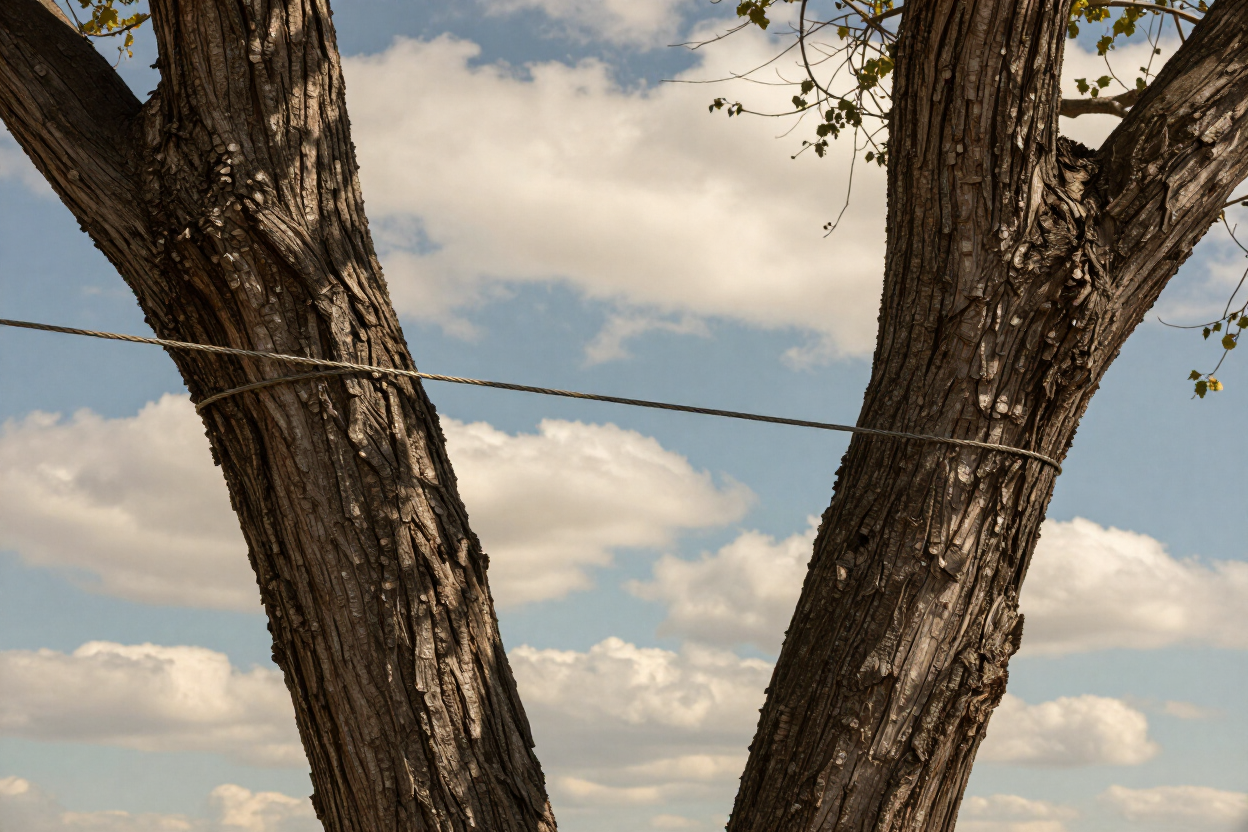
Cabling involves high-strength steel cables installed between major limbs or stems to limit the distance they can move in wind or under snow load. Split crotches are the most common reason property owners call us — where two major stems grow at a narrow angle and the union is under constant stress.
Bracing uses threaded steel rods inserted through a trunk or branch to stabilise a split or crack. It's typically used alongside cabling on trees that have already begun to fracture. Heavy overhanging limbs and a pronounced lean are two additional conditions where this work applies.
Not every structurally compromised tree is a candidate. The tree must have enough healthy wood to hold the hardware and enough life expectancy to make the investment worthwhile. We assess both before recommending a system. If you're not sure about the tree's health, a tree health assessment is a good starting point.
Cabling or Removal — Choosing the Right Path
A healthy tree with a structurally weak union or a heavy limb overhanging a structure is often a cabling candidate, not a removal candidate. If the tree contributes shade, privacy, or property value, support hardware gives it a longer useful life while managing the risk. The cost angle is worth saying plainly: cabling typically costs less than full removal and avoids the stump grinding, replanting, and yard disruption that follow.
Some conditions make removal the only responsible call. A tree that is more than 50 percent dead, actively decaying at the root collar, or leaning toward a structure with no root anchor to resist it cannot be saved by hardware. We will tell property owners which situation they are in rather than install cabling on a tree that needs professional tree removal in Okotoks.
We assess the tree's structural integrity, species, age, root zone, and proximity to buildings before recommending a course of action. The goal is the right outcome for the tree and the property, not the more expensive service. You can request a free quote and we'll give you a straight answer on both options.
How We Install and Monitor Cabling Systems
What the Installation Process Looks Like
We begin with a ground-level and aerial assessment to identify the load points and determine where hardware must be anchored. Cables are installed in the upper third of the crown, connecting co-dominant stems or major limbs at points that distribute load away from the weak union. When bracing is needed alongside cabling, rods are inserted through the trunk or affected branch below the failure point.
We use high-strength galvanised or stainless steel hardware rated for the expected load. A properly installed system on a healthy tree typically lasts 8 to 15 years depending on the tree's growth rate, the hardware specification, and Alberta's seasonal stress load. Freeze-thaw cycles and heavy snow accumulation both affect system tension over time. This isn't a permanent fix — it's a long-term management tool.
Once installed, cabling and bracing systems need periodic inspection — typically every two to three years — to check for hardware corrosion, cable tension changes, and tree growth that may have shifted load distribution. We offer follow-up assessments to Okotoks property owners who want to keep their systems current. Book a tree health and structural assessment to get started.
Common Questions About Tree Cabling and Bracing in Okotoks
How long does a tree cabling and bracing system last in Okotoks?
A well-installed cabling system on a healthy tree typically lasts 8 to 15 years in Okotoks. Alberta's freeze-thaw cycles and seasonal snow load can affect cable tension over time, so we recommend an inspection every two to three years. Hardware life depends on the tree species, growth rate, and the grade of steel used.
Can cabling and bracing protect my tree from storm damage?
Cabling and bracing significantly reduces the risk of branch or stem failure during high-wind and heavy-snow events. It limits how far co-dominant stems can separate and absorbs dynamic load that would otherwise split the union. It does not make a tree storm-proof, but it does reduce the likelihood of a major failure on a healthy tree.
Is cabling and bracing cheaper than removing a tree?
In most cases, yes. Cabling and bracing costs less upfront than full tree removal, which also involves stump grinding, debris hauling, and site cleanup. The right comparison depends on the tree's condition and the risk it poses. We provide free quotes for both options so you can make an informed decision without pressure.
Which tree species in Alberta respond best to cabling and bracing?
Mature elms, Manitoba maples, and large spruce trees in Okotoks are common cabling candidates because of their growth structure and longevity. Fruit trees and ornamental species with heavy horizontal limbs also benefit. The key factor is that the tree must have sufficient live wood to anchor hardware and enough healthy life expectancy to justify the work.
Get a Free Cabling and Bracing Assessment
We'll assess your tree's structural condition at no cost and give you a straight answer on whether cabling, bracing, or removal is the right call. Big Rock Tree Service serves Okotoks and surrounding communities — call or send a message and we'll get back to you fast.